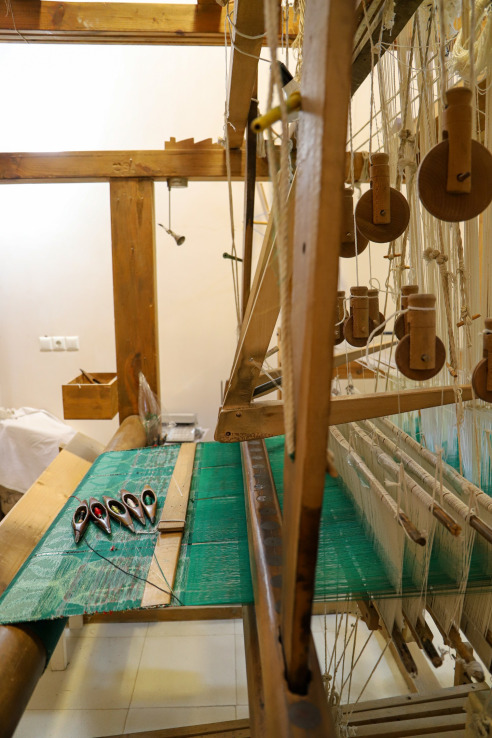
Zari - Gold Brocade
Zari, or gold brocade, is woven on a pure silk warp with a weft referred to as Golabetun, consisting of a silk core covered with a fine layer of either gold or silver. The basis for the Zari loom is identical to a regular handloom, however; it is operated by two persons with the weaving done below, while the single rows composing the pattern of the fabric are pre-designed and lifted by the use of wooden levers by another person positioned on a raised platform above. Zari was used for the clothing of royalty, for palace wall hangings, or as ceremonial court gifts during the Sassanid reign, reaching its artistic pinnacle during the Safavid era. Kashan was one of the main centers for Zari, hosting some of the most renowned masters who significantly contributed to the development of this art over time.
In 2009, the late Master Mashallah Enayati was invited to install and operate a Zari loom at Manouchehri house. Mr Enayati had learned his art from his father, and mastered additional skills from famous brocade weaving masters such as Master Ali Khandan and Master Talebian, spending more than 30 years weaving Zari. Under the patronage of Manouchehri House, he imparted his knowledge to Reza Yaallah, himself a master velvet weaver who currently operates our Zari workshop together with his apprentices.